
DeSoto Parish County Criminal Records
A DeSoto Parish County criminal court record is the case file kept by the DeSoto Parish Clerk of Court Criminal Division after a criminal matter reaches court. The Clerk describes its criminal records as citations, indictments, arraignments, and dispositions. Those terms matter because they show the court side of the case, not just the fact of an arrest. The record can show what charge was filed, when the defendant was arraigned, what plea was entered, whether motions or minutes were recorded, and how the case ended.
The local trial court is the 42nd Judicial District Court, which states that it has original jurisdiction over civil, criminal, and juvenile matters in DeSoto Parish. Criminal files are handled through that District Court and the Clerk, while limited local matters can also involve city, mayor's, or justice of the peace courts. A jail entry or sheriff record may show a booking charge first, but the court record becomes the main source for arraignment, disposition, and sentence once the case is filed.
The Clerk Criminal Division source is shown in the manifest as a captured reference point. Because that capture failed during image collection, the successful criminal page images come from Louisiana statutes and criminal justice office sources used to explain access limits, expungement, juvenile confidentiality, Article 894, and defense contact channels.
DeSoto Parish Criminal Case Flow
Criminal cases in DeSoto Parish County often begin with an arrest by the Sheriff's Office, Mansfield Police Department, Louisiana State Police, probation and parole, or another agency. DPSO's corrections material says an arrest file is sent to the District Attorney, who decides how to proceed in court. That decision is why a roster charge is not the same thing as a court conviction. The court file starts to matter when a citation, indictment, bill of information, arraignment minute, or other criminal filing becomes part of the Clerk's record.
Case flow: Arrest or Citation › Charges Filed › Arraignment › Pretrial and Motions › Plea or Trial › Disposition › Sentencing
| Stage | What the DeSoto Parish County Record May Show |
|---|---|
| Charges filed | Citation, indictment, or other charging entry accepted into the court file. |
| Arraignment | Court event where the charge is presented and a plea may be entered. |
| Pretrial and motions | Minute entries, motions, orders, subpoenas, hearing dates, and rulings. |
| Plea or trial | Guilty plea, not guilty finding, trial result, dismissal, or other outcome. |
| Disposition and sentence | Final case or charge outcome, sentence terms, fines, court costs, or probation notes if recorded. |
The District 42 public defender page is one successful manifest source tied to criminal cases in the parish.
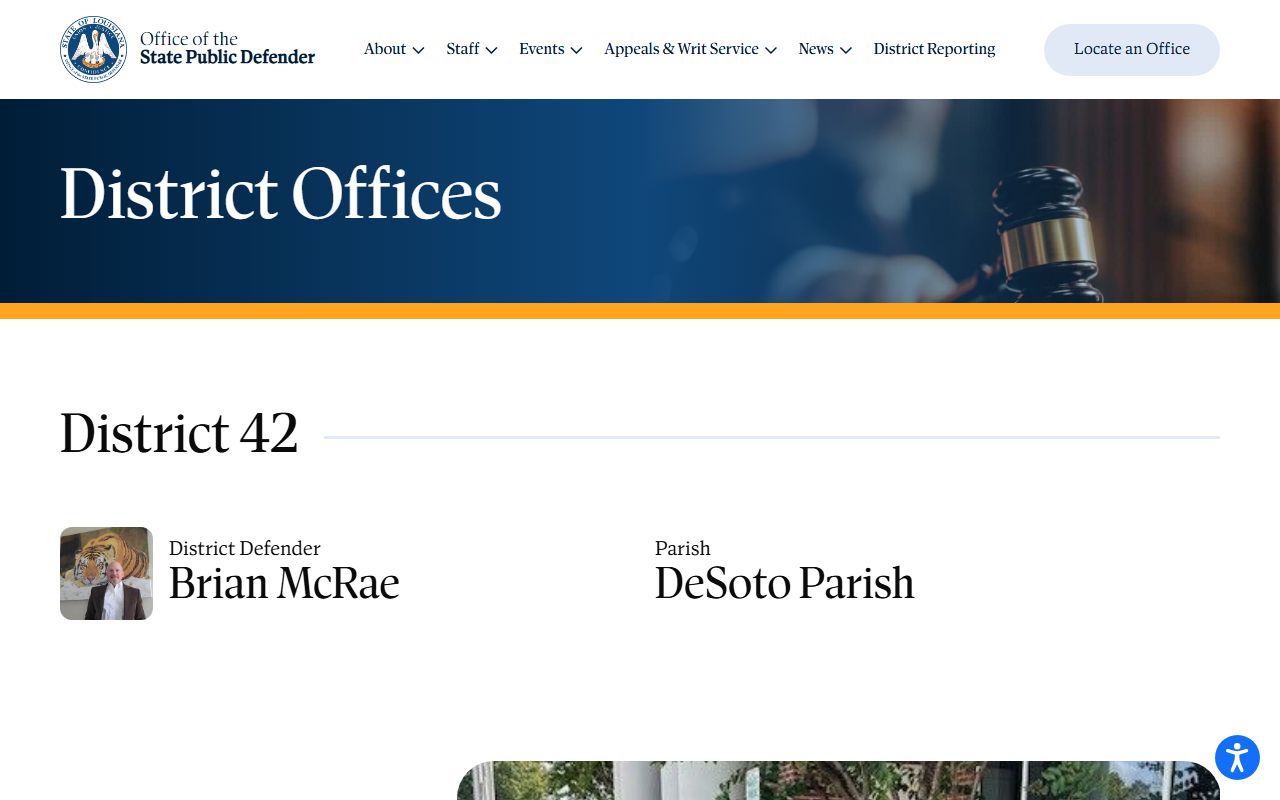
That source supports the local distinction between prosecution, defense, and court records: the Public Defender serves eligible accused persons, while the Clerk keeps the filed criminal case record.
Search DeSoto Parish Criminal Records
The main online court record channel is ClerkNet, the DeSoto Parish Clerk's E-Search and public portal. The research notes that released records are those recorded, indexed, verified, and released for general public viewing. ClerkNet can require an account or subscription for full access. The official app text says the large search box accepts a case number, instrument number, or name, and that results filter in real time as the user types. For criminal cases, defendant name and case number are the most useful starting points.
- Open ClerkNet or start from the Clerk Criminal Division page if the record type is unclear.
- Use the large search box with a defendant name or known case number.
- Review criminal case entries for citations, indictment references, arraignment, disposition, and minutes.
- Check whether document viewing, printing, or downloading requires a subscription or per-page purchase.
- Contact the Clerk for certified copies, official minutes, or records that do not appear online.
Online search results should be treated as an access tool, not as the official certified record. The Clerk's own disclaimer says the online version is not official, and that some records may have official numbers before they are fully indexed or available for public search. Certified copies and certified minutes must be requested from the Clerk, especially when the record will be used in court, licensing, immigration, or another formal setting.
What Criminal Court Records Show
DeSoto Parish County criminal court records can contain several layers of data. Some fields identify the file. Others describe the events in the case. The research did not include a logged-in ClerkNet docket, so the field list below is based on the Clerk's criminal description, the ClerkNet search inventory, and the general DeSoto court record inventory.
| Field | What It Shows |
|---|---|
| Case number | The court file identifier when visible through ClerkNet or Clerk records. |
| Defendant name | The person charged in the criminal case. |
| Citation or indictment | The charging entry or formal accusation noted by the Clerk Criminal Division. |
| Arraignment | The court event where charges are presented and a plea may be recorded. |
| Minute entry | The official court summary of what happened on a court date. |
| Plea | Whether a guilty, not guilty, or other plea was entered when shown. |
| Disposition | The outcome of a charge or case, such as guilty, dismissed, or other final action. |
| Sentence | Penalty, probation, fine, or related sentencing terms if included in the record. |
The full case file should not be confused with the charge list alone. A closer charge-by-charge discussion belongs with DeSoto Parish County arrest records and court charges, while this criminal court record file is where the court outcome and sentence are read.
DeSoto Parish Charges vs Convictions
A charge is an accusation. A conviction is an outcome. DeSoto Parish County criminal court records may show charges that were filed, amended, reduced, dismissed, or resolved by plea or trial. The difference is central when reading a record because a person can be booked on one charge, prosecuted on another, and convicted of a different or lesser offense. A dismissal or acquittal is also part of the record, but it is not a conviction.
| Point | Charge | Conviction |
|---|---|---|
| Meaning | An allegation filed or carried forward after arrest or citation. | A final guilt outcome by plea, verdict, or accepted court disposition. |
| Where it appears | Jail roster, citation, indictment, arraignment, and court docket entries. | Disposition, minutes, judgment, sentence, and certified court records. |
| Can change | Yes. It may be amended, reduced, added, dropped, or dismissed. | Only through court action, appeal, post-conviction relief, pardon, or expungement limits. |
| Record risk | Should not be read as proof of guilt. | Can carry sentence, fine, custody, probation, or collateral effects. |
The manifest includes Louisiana's law-enforcement public-record exemption source at La. R.S. 44:3.
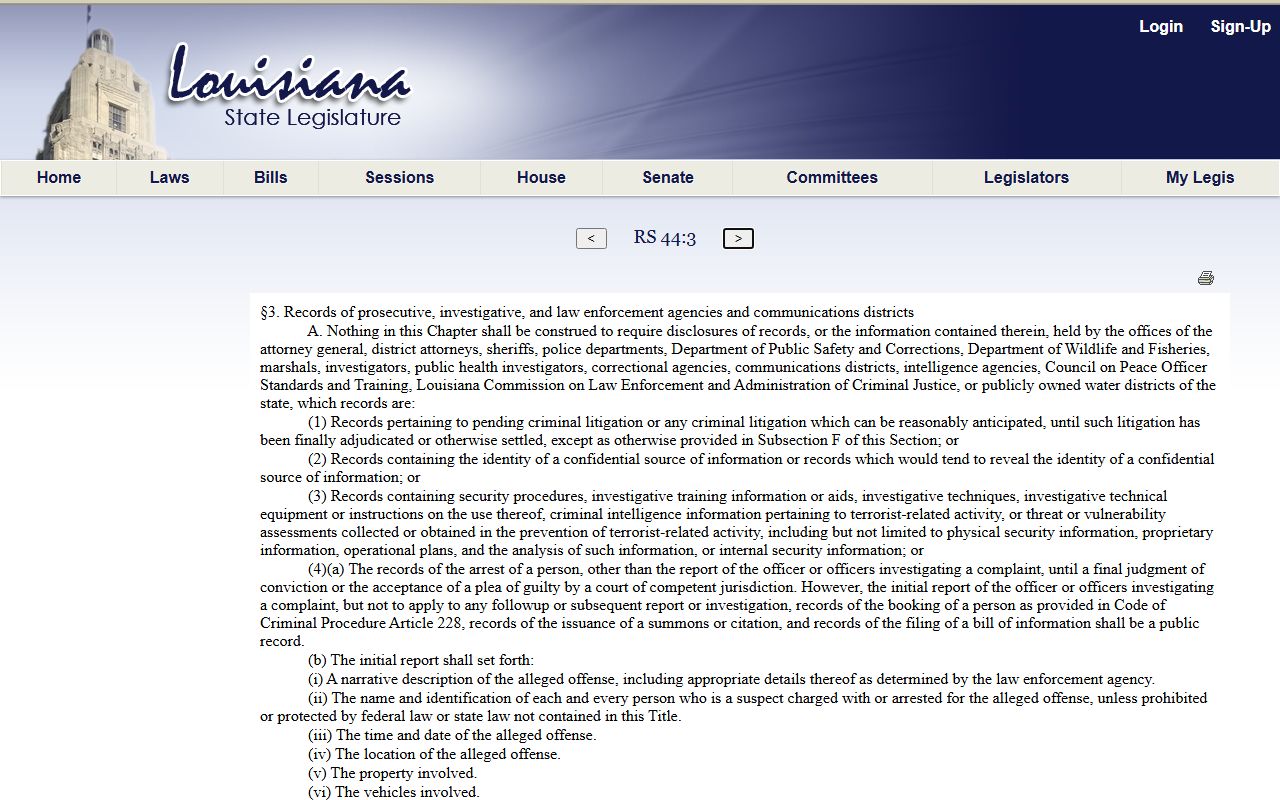
That statute helps explain why law-enforcement arrest records and court case files follow different public-access rules before final judgment or a guilty plea.
Public Access to Criminal Records
Louisiana law generally favors access to public records, but criminal matters have important boundaries. La. R.S. 44:31 gives adults the right to inspect, copy, or reproduce public records unless another law applies. La. R.S. 44:32 covers how custodians handle inspection and copying. For DeSoto Parish County criminal court records, the local custodian is usually the Clerk for court files and the Sheriff's Office for booking, jail, and law-enforcement records.
Access rule: DeSoto Parish criminal records such as citations, indictments, arraignments, and dispositions are public unless juvenile, sealed, or otherwise restricted.
Criminal copies excluding court minutes cost $1 per page in the Clerk research. Certified copies add $5 per document. Court minutes cost $10 per extract or date, and certified minutes add $5. The Clerk does not accept fines or fees tied to criminal sentencing or traffic citations, which are typically handled through the Sheriff's Department or other cited payment channels.
The manifest also includes the Louisiana expungement source, Code of Criminal Procedure article 971.
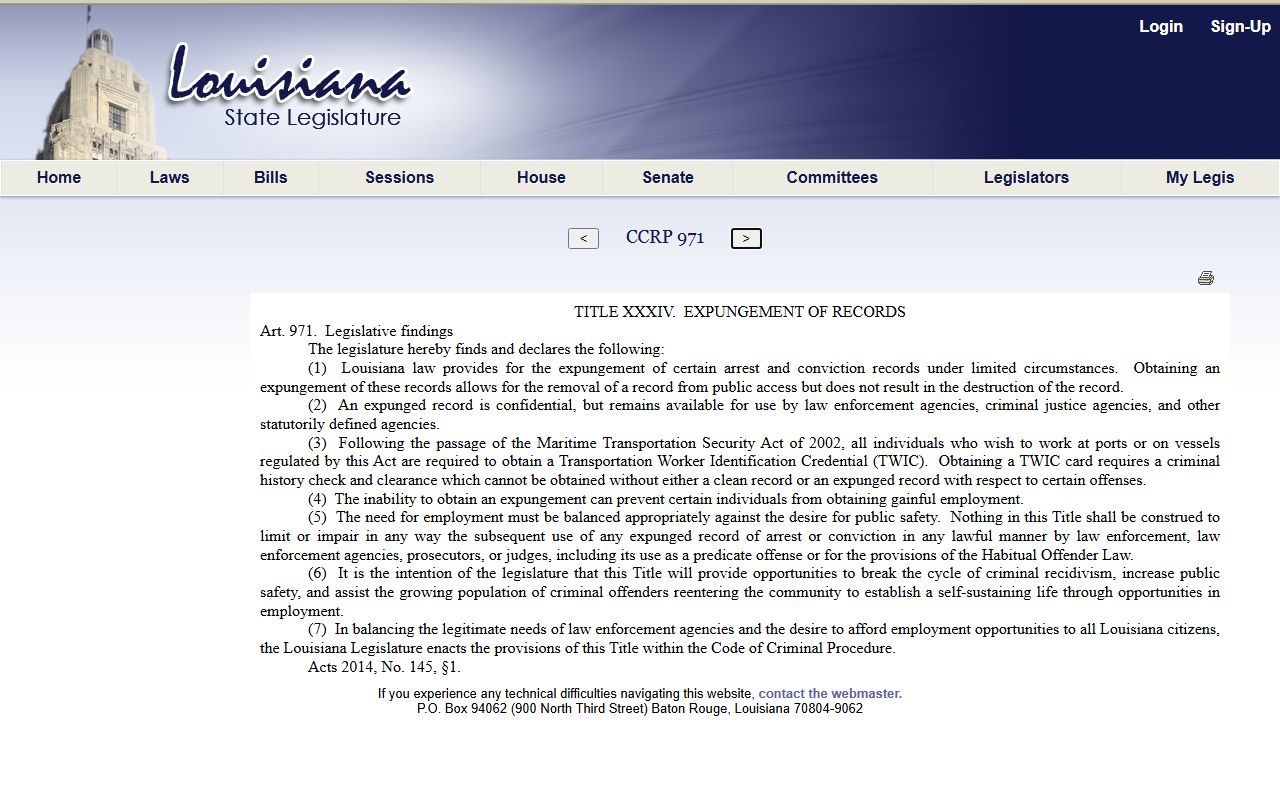
Article 971 is important because Louisiana expungement removes certain records from public access, but it does not destroy the record or block all criminal justice access.
Sealed vs Expunged Records
Sealed and expunged are not the same thing in DeSoto Parish County criminal court records. A sealed record is closed from ordinary public access by law or court order. An expunged record is removed from public access under Louisiana expungement law, but the research notes that the record is not destroyed and defined agencies may still have access. Both categories can affect what appears in ClerkNet, at the counter, or in a copy request.
| Point | Sealed | Expunged |
|---|---|---|
| Public view | Hidden or limited by court order or statute. | Removed from public access after a valid expungement order. |
| Record existence | The file still exists with restricted access. | The file is not destroyed under Louisiana article 971. |
| Who may access | Court, parties, attorneys, law enforcement, or others allowed by order. | Defined agencies may retain access despite public removal. |
| Local source | The Clerk excludes 42nd JDC-sealed criminal records from ordinary public records. | The Clerk documents page lists expungement packets and forms. |
Louisiana also has juvenile confidentiality. The successful manifest image for Children's Code article 412 supports that limit.
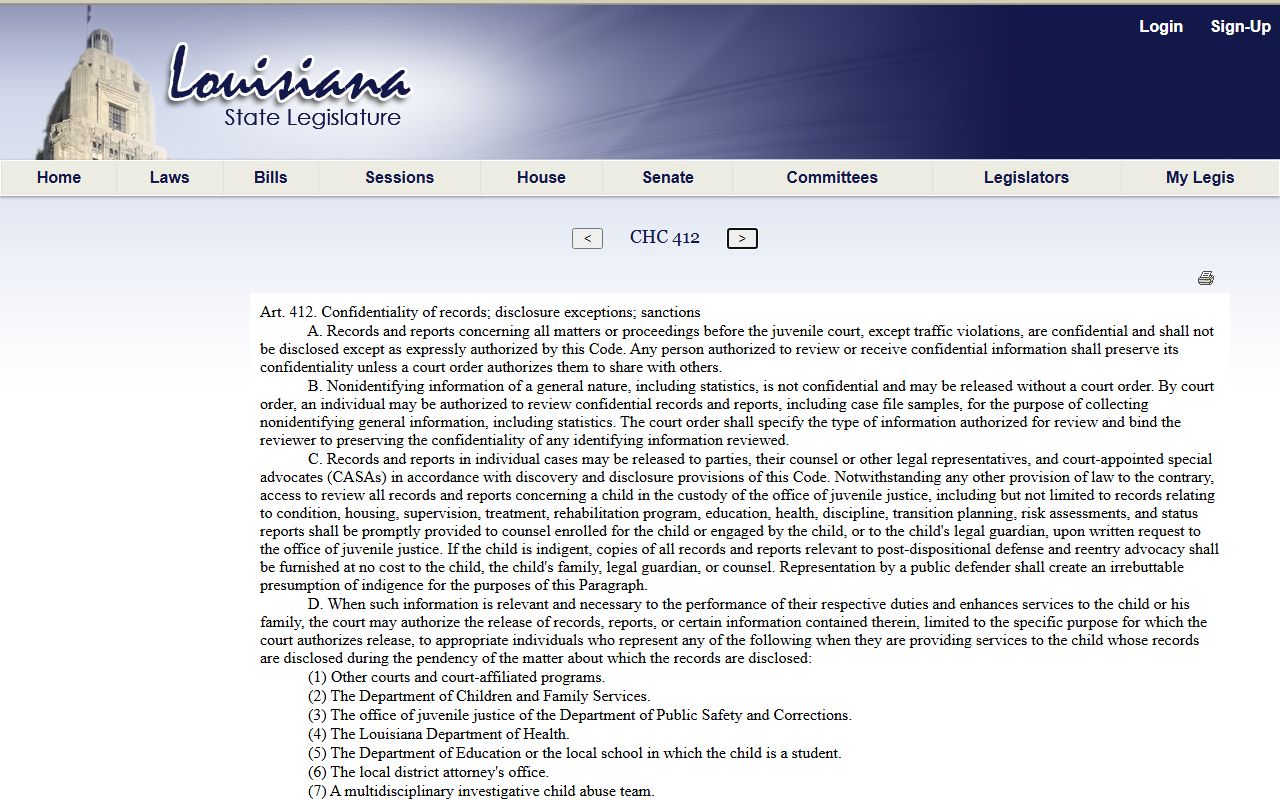
That juvenile source aligns with the Clerk's practical note that juvenile criminal records are not public through ordinary DeSoto Parish criminal record access.
Read DeSoto Parish Dispositions
Disposition is the outcome of a case or charge. In a DeSoto Parish County criminal court record, a disposition can show that a charge ended by guilty plea, trial verdict, dismissal, nolle prosequi, or another court action. A sentence is a related but separate entry. It may show fines, costs, probation, custody, or other terms. Court minutes can be the best source for what happened on a particular date when the docket line is short.
Article 894 can appear in some Louisiana misdemeanor or DWI-related contexts. The manifest includes the successful source for Louisiana Code of Criminal Procedure article 894.
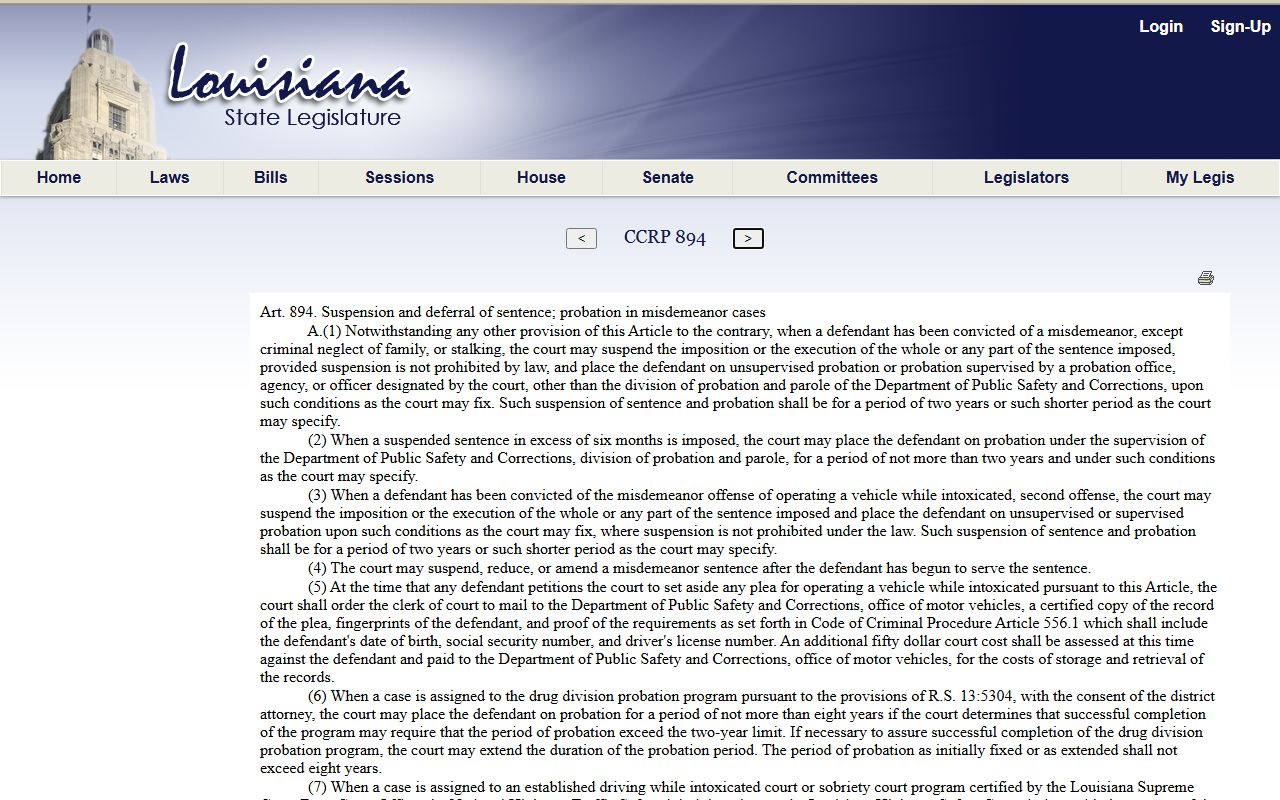
That source should be read with the court record itself because Article 894 language depends on the case type, court action, and later record handling.
Note: A court disposition is more reliable than a booking charge when deciding whether a DeSoto Parish criminal matter ended in conviction.
Restricted Criminal Records in DeSoto Parish
Restricted DeSoto Parish County criminal court records include juvenile matters, court-sealed cases, expunged records removed from public access, and records with protected identifiers. Adoption, mental health, interdiction, minor child, victim safety, and financial information can also be restricted in related files. If a criminal case does not appear in ClerkNet, that absence does not prove that no record exists. The file may be pending indexing, sealed, juvenile, expunged, under a different name or number, or held by another custodian.
For records created by the Sheriff's Office, use the DPSO public-record request process rather than the Clerk. For court files, certified minutes, criminal copies, and sealed-record questions, the Clerk is the starting point. For legal advice, active defense, or surrender questions, contact a licensed attorney or the public defender if eligibility applies. Public lookup is a starting point, not a substitute for the court's official record.